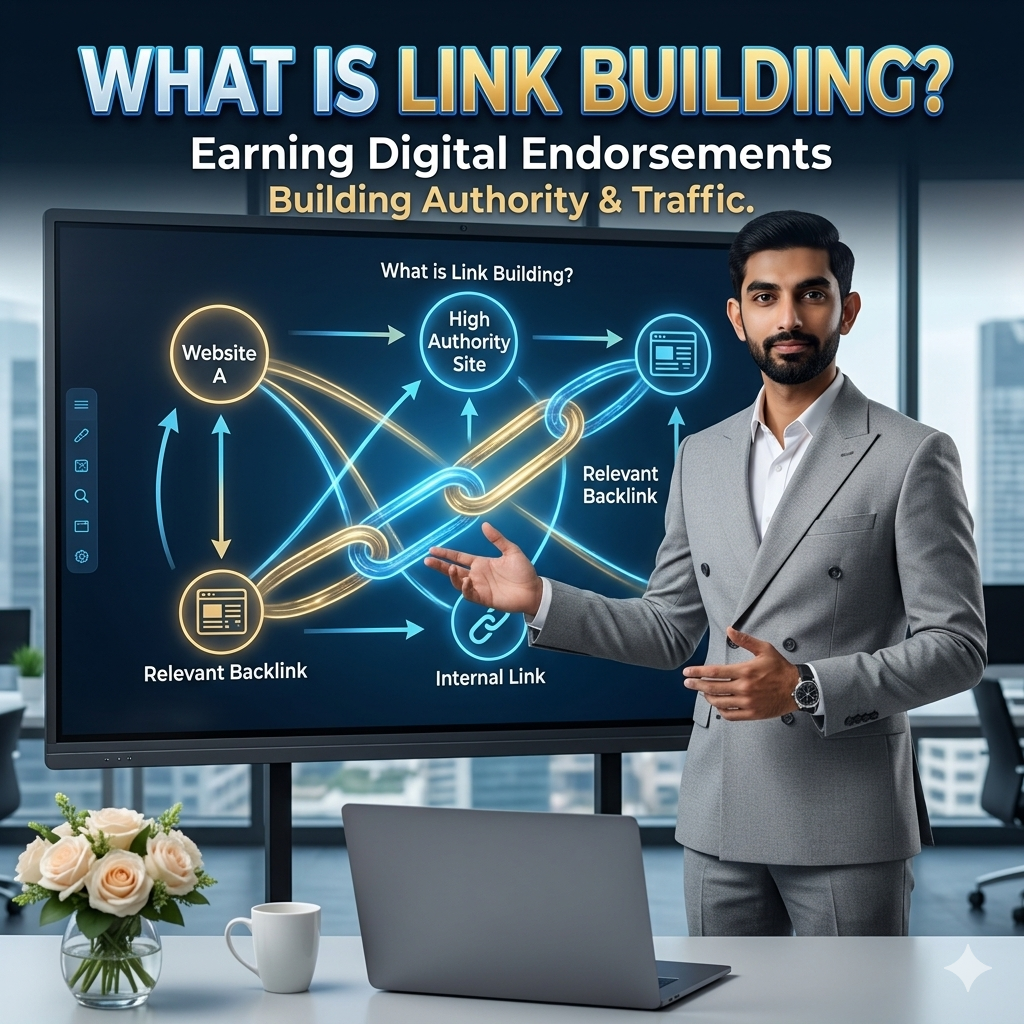
What Are Backlinks ?
At the most basic level, what are backlinks?
Link building is an essential SEO strategy focused on getting other websites to link to your own. These hyperlinks are vital for several reasons. A backlink is simply a hyperlink created when one website links to another. If a popular tech blog writes an article and includes a clickable link that points to your software company’s homepage, you have just earned a backlink. They are the digital bridges that connect the internet, allowing users to navigate seamlessly from page to page.
What Are Backlinks in SEO?
While they are useful for navigation, you might be wondering, what are backlinks in SEO specifically? In the context of Search Engine Optimization, these links act as digital “votes of confidence.”
When search engine crawlers (like Googlebot) scan the web, they look at these links to understand the relationship between different pages. If multiple reputable sites link to the same webpage, search engines infer that the content on that page is valuable, credible, and worth showing to searchers. In SEO terminology, we often refer to this passing of credibility as “link juice.”
Do Backlinks Help SEO?
A common question from business owners is: Do backlinks help SEO enough to justify the effort? The candid answer is an absolute yes. Backlinks remain one of Google’s most heavily weighted ranking factors.
Without them, ranking for competitive keywords is virtually impossible. However, quality matters far more than quantity. A few authority backlinks from industry-leading sites will boost your rankings significantly more than hundreds of links from low-quality spam sites. Securing links from relevant, high-traffic sources tells Google that your site is a trusted resource in your specific niche.
Why is Link Building Crucial for Your Business?
Understanding the definition is only the first step. To truly appreciate why this warrants a significant portion of your marketing budget, you need to understand the tangible business benefits:
- Improved Search Rankings: As mentioned, backlinks are a top-three ranking factor for Google. Without them, ranking for competitive, high-CPC (Cost Per Click) keywords is nearly impossible.
- Faster Indexing: Search engine bots constantly crawl the web looking for new content. They discover this content by following links. If you earn a link from a site that gets crawled frequently, your new pages will be indexed and ranked much faster.
- Targeted Referral Traffic: A well-placed link on a website within your specific niche does not just boost your SEO; it drives real, highly targeted human visitors to your site who are already interested in what you have to offer.
- Brand Authority and Trust: Being mentioned alongside industry leaders naturally elevates your brand’s perception in the eyes of consumers.
How to Find Backlinks
Before you start building new links, you need to know how to analyze your current profile and spy on your competitors. So, how to find backlinks effectively?
To understand how to view backlinks pointing to your own site, the most accurate starting point is Google Search Console, which is entirely free. However, if you want to know how to find backlinks to a site owned by a competitor, you will need third-party SEO software.
Tools like Ahrefs, Semrush, or Moz are industry standards, but if you are on a tight budget, searching for a free backlink checker online will yield several tools that offer limited, but useful, daily searches. These tools allow you to paste any URL and see exactly which sites are linking to it, providing a roadmap for your own outreach.
How to Get Backlinks
The biggest hurdle for most website owners is figuring out how to get backlinks reliably. Waiting for people to magically find your site and link to it is not a viable strategy. You have to be proactive. If you are wondering how to get backlinks to your website, you need to combine stellar content creation with targeted outreach.
Here are the foundational strategies for how to get quality backlinks:
- Publish Linkable Assets: Create deep, data-driven content, original research, or comprehensive guides. People naturally link to authoritative data.
- Guest Posting: Find a reputable backlink blog in your industry and offer to write a high-quality article for them. In return, they will usually allow you to include a link back to your site in the author bio or content body.
- Unlinked Brand Mentions: Use media monitoring tools to find out who is talking about your brand online without linking to you, and politely ask them to add the hyperlink.
Types of Link Building?
When planning your strategy, it is crucial to understand that not all links are created equal. Search engines actively penalize manipulative tactics. So, what are the different types of link building? Broadly speaking, the industry categorizes these tactics into three distinct risk profiles: White Hat, Gray Hat, and Black Hat.
The Risk Profiles
| Strategy Type | Definition | Risk Level | Long-Term Value |
| White Hat | Tactics that strictly follow search engine guidelines, focusing on user value and earned placements. | Very Low | Excellent |
| Gray Hat | Tactics that technically violate guidelines but are difficult for algorithms to detect or prove. | Medium | Moderate (but risky) |
| Black Hat | Aggressive, manipulative tactics designed purely to trick search engines, such as buying massive link lists. | Extremely High | Zero (Will lead to penalties) |
Focusing exclusively on White Hat strategies is the only sustainable way to grow your organic traffic. Let’s break down the most effective, legitimate types of link building you should be utilizing.
1. Natural Editorial Links
This is the holy grail of backlinking. An editorial link occurs naturally when another webmaster, journalist, or blogger links to your content simply because it is exceptionally valuable, informative, or entertaining. You did not ask for the link; you earned it.
- How to get them: Publish groundbreaking original research, comprehensive data studies, unique opinion pieces, or highly engaging infographics that others in your industry will naturally want to reference.
2. Manual Outreach Link Building
This is where the majority of SEO professionals spend their time. Manual outreach involves creating an incredible piece of content and then proactively emailing website owners to introduce them to it, with the hope that they will find it valuable enough to link to.
-
- Guest Blogging: Reaching out to authoritative blogs in your niche and offering to write a high-quality article for them for free, in exchange for a link back to your site within the author bio or the body text.
- Profile link building.
- Blog commenting
- PDF submission
- Image submission
- Video submission
- audio submission
- Broken Link Building: Finding websites in your niche that have broken (dead) outbound links. You email the site owner to notify them of the broken link and suggest your own relevant, working content as a replacement. It is a win-win: they fix a user experience issue, and you get a backlink.
- Resource Page Link Building: Many websites have “Resources” or “Helpful Links” pages curated for their audience. If you have created a definitive guide or a useful tool, you can reach out and ask to be added to their list.
3. Unlinked Brand Mentions
Sometimes, a website will mention your company name, your product, or one of your executives in an article, but they will fail to actually hyperlink to your website.
- How to leverage this: You can use media monitoring tools to track your brand name across the web. When you spot an unlinked mention, a polite email thanking the author for the mention and gently requesting they add a hyperlink is often highly successful.
4. Digital PR
Public relations has merged heavily with SEO. Digital PR involves creating compelling, newsworthy stories or campaigns and pitching them to online journalists and major publications. When these publications cover your story, they typically provide a highly authoritative backlink. This tactic requires creativity and an understanding of what journalists consider “newsworthy.”
How to Evaluate the Value of a Backlink
Before you spend hours trying to secure a backlink from a specific website, you need to determine if that link is actually worth your time. Here are the key metrics to evaluate:
- Domain Authority (DA) or Domain Rating (DR): These are third-party metrics (created by companies like Moz and Ahrefs) that predict how well a website will rank. You want links from sites with a higher DA/DR than your own.
- Relevance: A link from a site about dog grooming to a site about financial software looks unnatural to Google and provides little value. Seek links from websites within your industry or a closely related niche.
- Organic Traffic: Does the linking website actually get visitors? A link from a site with high organic traffic is a strong indicator to Google that the site is healthy and trusted.
- Link Placement: A link embedded contextually within the main body of a blog post is far more valuable than a link stuffed into the footer or a sidebar.
- Anchor Text: This is the clickable text in a hyperlink. If you want to rank for “accounting software,” having another site link to you using the phrase “best accounting software” provides a stronger signal than linking with the word “click here.”
How to Build Backlinks: Tactics and Pitfalls
When planning out how to build backlinks, it is crucial to know which methods to embrace and which to avoid. Understanding how to create backlinks safely ensures your site won’t get penalized by Google.
- Curated Directories: Submitting your site to highly relevant, industry-specific backlinks websites or local business directories is a safe way to build a foundational profile. However, avoid spammy backlink websites that exist solely to host thousands of unrelated links.
- The Danger of Exchanges: You might be tempted to engage in a backlink exchange (e.g., “Link to me, and I’ll link to you”). While doing this occasionally with a trusted partner makes sense, relying on automated or large-scale link exchanges is a direct violation of Google’s guidelines and will trigger a penalty. Keep it natural.
- Community Engagement: Participating in niche communities can yield forum backlinks. Similarly, sharing your content on platforms like LinkedIn, X, or Reddit falls under social backlinking. While both forum and social links are almost always “no-follow” (meaning they don’t directly boost SEO authority), they are excellent for driving targeted referral traffic and making your overall link profile look natural to search engines.
Setting Up Your Campaign for Success
Link building is not a one-time task; it is an ongoing campaign that requires consistency, high-quality content, and relationship building. The days of easily manipulating search engines are long gone. In 2026, the algorithms are smarter than ever, prioritizing genuine value and authentic connections.
To succeed, your primary focus must shift from merely “getting links” to “building relationships and providing immense value.” When you create resources that genuinely help people solve problems or understand complex topics, other webmasters will naturally want to share your work with their audience.
Start by auditing your current website. Identify your most valuable pages—the ones that target high-CPC keywords and drive conversions. Then, utilize strategies like the Skyscraper technique (finding highly-linked content, making a much better version, and reaching out to the original linkers) or Broken Link Building to systematically build authority to those specific pages.
Conclusion
Building a robust backlink profile is not an overnight task; it requires persistence, relationship building, and a commitment to creating genuinely valuable content. By focusing on earning high-quality, relevant links rather than trying to game the system, you will establish your website as an authority and secure long-term, sustainable organic traffic.

Next Topic
How many backlinks do i need to rank
SEO Guide for Beginners: Complete Search Engine Optimization Strategy (2026)